

November 29, 2017
What is Emotional Eating: A Guide to Emotional Eating Triggers and Strategies for When It Gets Out of Control
Written by Rachel Eddins
Posted in Emotional Eating & Body Image and with tags: Emotional Eating, stress eating, weight loss

Food is an essential part of our everyday lives—we all have to eat to survive. But, for most everyone, food is much more than a source of nutrition and energy.
Food is ingrained in our social lives, work events, and even family legacies. For most people, food carries some sort of meaning, whether that’s pleasure, comfort, tradition, shame, or a combination of all that and more.
There are few of us who haven’t celebrated with a birthday cake or a wedding cake, ended a difficult day with our favorite snack, or bonded with loved ones over a cherished recipe. There are few of us who’ve let that 30-dollar steak go to the trash or avoided return trips to the holiday potluck buffet.
In other words, there are few of us who haven’t engaged in emotional eating or eating for some reason other than physical hunger.
Emotional Eating: Are Your Eating Habits Driven by Emotion?
What is emotional eating?
Write down everything that comes to mind in response to this statement:
Food is….
When you consider how surrounded we are by messages connecting emotions to food—from ads conflating candy with fun to the rom-com pint of breakup ice cream to the lessons we learn within our families—it makes sense that many of us eat emotionally.
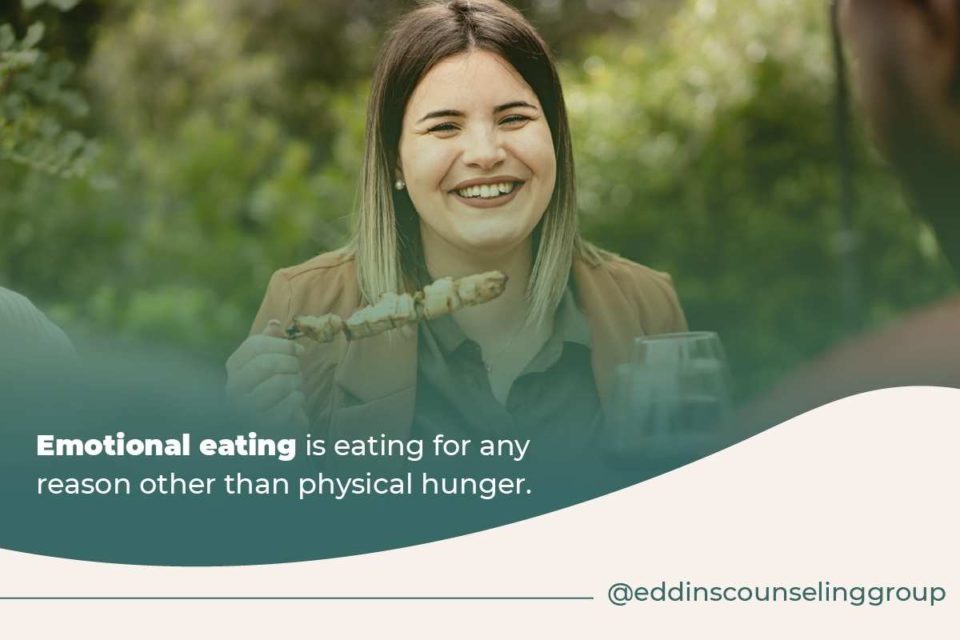
Emotional eating is eating for any reason other than physical hunger. This is nothing to feel ashamed of. It’s very normal to emotionally eat or eat for pleasure or enjoyment from time to time.
What came up for you in response to the prompt, “food is”?
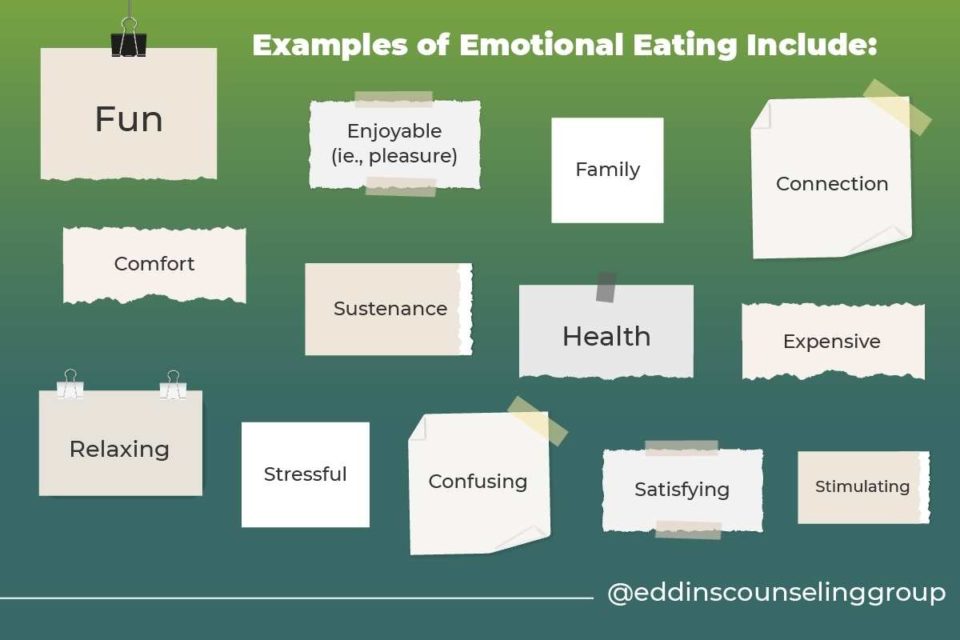
Here are some common examples shared by others.
Fun. Enjoyable (ie., pleasure). Family. Connection. Comfort. Sustenance. Health. Expensive. Relaxing. Stressful. Confusing. Satisfying. Stimulating.
As you can see, most associations we have with food are actually emotional.
When Emotional Eating Gets Out of Control
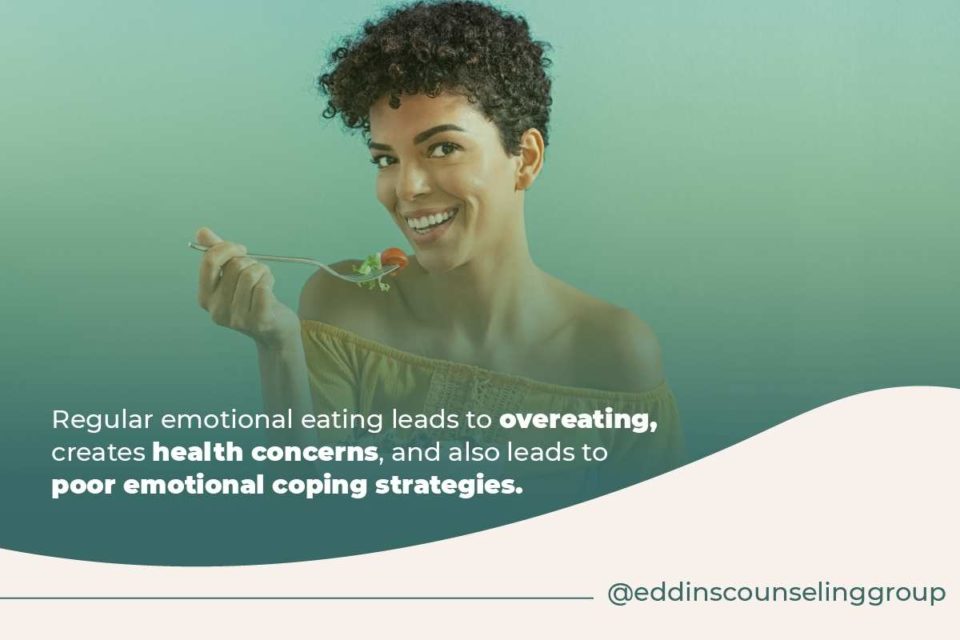
When food becomes a primary response to emotional triggers, it becomes problematic. Not only does regular emotional eating lead to overeating and create health concerns, it also leads to poor emotional coping strategies.
Good mental health includes using a variety of coping strategies and emotional regulation skills.
Although food can and does offer pleasure, that pleasure is not sustainable. In fact, getting stuck in the cycle of using food for pleasure can prevent you from creating sustainable sources of pleasure in your life.
It creates a cycle of unmet needs and can lead to getting stuck in a cycle of guilt and shame.
You may also worry about your weight and physical health. It’s very common to fall in and out of diets, only to feel frustrated and defeated, questioning why you can’t seem to make a sustainable change to your relationship with food.
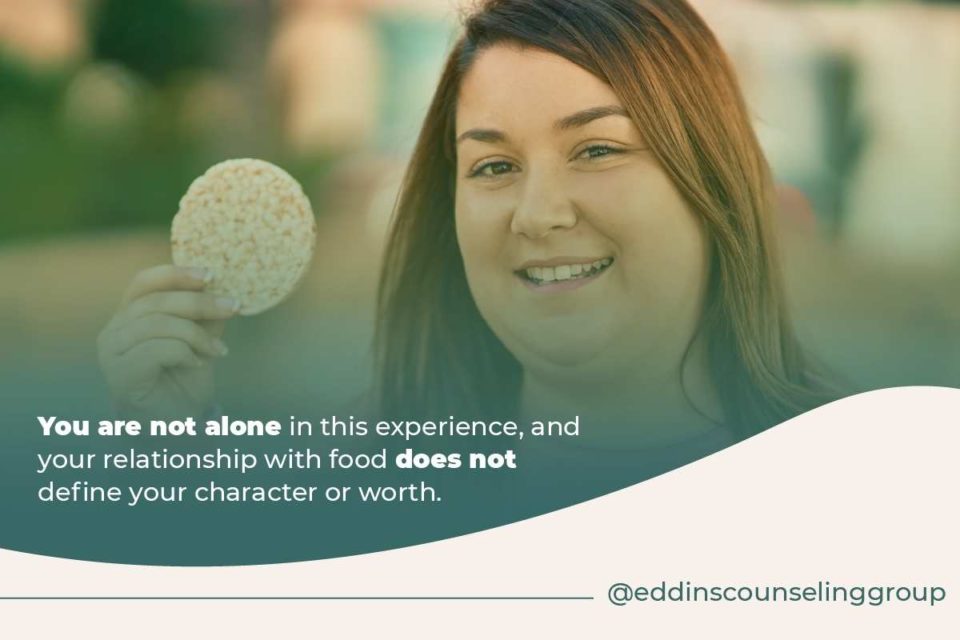
You are not alone in this experience, and your relationship with food does not define your character or worth.
To improve your relationship with food—and, most importantly, your relationship with yourself—it’s important to learn more about what emotional eating is, what it isn’t, and which specific emotions or triggers might be driving you to overeat.
What Is the Difference Between Emotional Hunger and Physical Hunger?
Our moods and our cravings for food are often deeply intertwined. Because we’ve grown up in a society full of messages conflating emotions with eating, it can be difficult to tell when we are emotionally hungry and when we are truly, physically hungry.
Furthermore, if we are “used to dealing with [our] feelings [by eating], it can be almost impossible to remember what true hunger feels like.”
For example, if we feel stressed, irritated and worn out after a long day at work, we might have a craving for something warm, rich and soothing. We may actually not be hungry at all. Instead, we might be looking for comfort and stress relief, and we turn to food in an attempt to reduce stress and get relief.
But, it’s just as likely that we could end a long day feeling physically hungry, especially if we didn’t take time for a nutritious snack or meal breaks.
In common situations like these, it can be difficult to untangle the source of our cravings and make healthy choices that provide our bodies with what they need.
It’s important to know the difference between emotional and physical hunger and to recognize the signs of each.
Physical Hunger
- Originates in the stomach and can lead to stomach growling or stomachache
- Can lead to increased salivation
- Can cause lightheadedness or feelings of physical weakness/exhaustion
- Signals that your body needs nutrients and energy
- Usually comes on gradually
- Often makes food smell and taste better
- Is “satisfied when your stomach is full”
Note: You might also experience some of these sensations when you are thirsty, not hungry. Don’t forget to drink water and stay hydrated throughout the day!
It’s also possible to experience “mouth hunger,” or a desire for the taste of food, even when you aren’t physically hungry.
Emotional Hunger
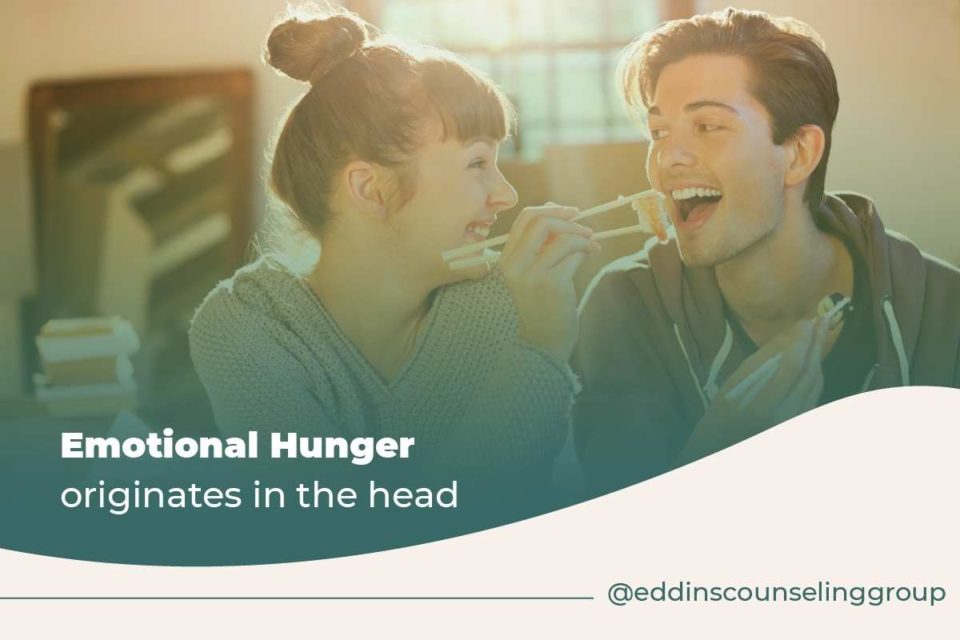
- Originates in the head
- Can prompt daydreaming about dinner even as you eat lunch, or obsessive thoughts about food throughout the day
- May crave “junk food or sugary snacks that provide an instant rush. You feel like you need cheesecake or pizza, and nothing else will do.”
- Usually comes on suddenly
- Can feel like physical hunger—like an emptiness in your core
- Can stem from a lack of satisfaction, security, and peace
- Might be hunger for connection, comfort, pleasure, entertainment, reward, stress relief, a sense of control, or independence, etc.
- Is not satisfied by food, no matter how much
Emotional hunger leads, of course, to emotionally driven eating. We overeat to fill that sense of emptiness, even when our hunger is actually for something other than food. And then, we often feel guilty for eating more than we wanted to, contributing to an ongoing cycle of emotional distress.
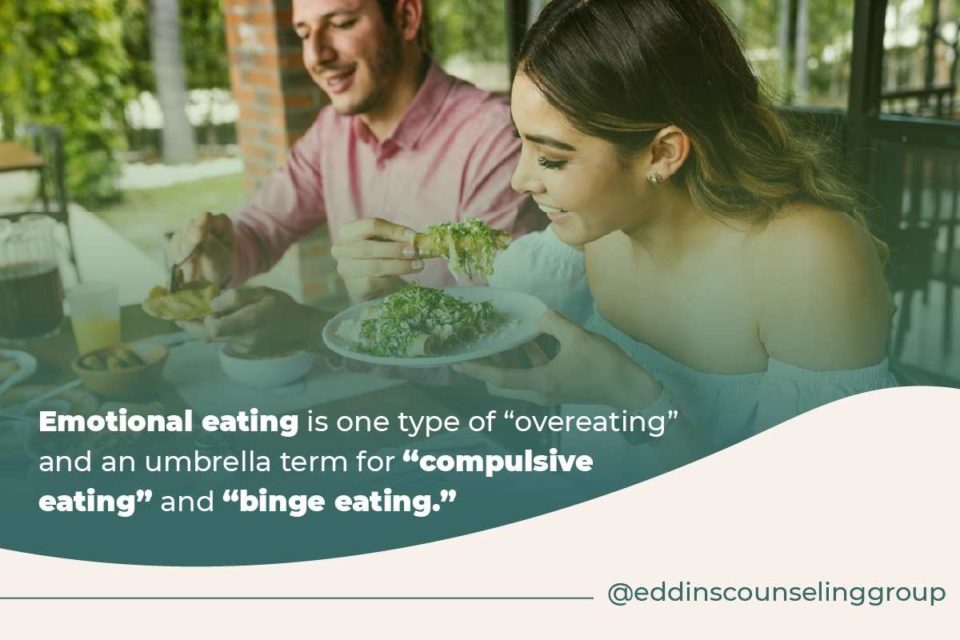
Emotional eating is one type of “overeating” and an umbrella term for “compulsive eating” and “binge eating.” Despite their close similarities, all of these designations have subtle, significant differences.
What Is the Difference Between Compulsive Overeating, Emotional Eating, and Binge Eating?
1. Overeating
Overeating is simply eating more than your body needs to feel full and stay healthy. There are many, many reasons that people overeat. Eating too much at a special occasion, for example, is something almost everyone has done, and it isn’t necessarily a sign of problematic emotional eating.
2. Emotional Eating
The most common factor that drives overeating is emotion. We eat too much because it tastes good, we’re bored and eating mindlessly, or because it offers relief from stress or negative feelings.
Sometimes, we eat “comfort foods,” such as ice cream, pizza, chips, etc., because they make us feel good. Comfort foods are usually high-calorie, high-fat foods that literally slow and calm our bodies, bringing on a sense of temporary relaxation.
Comfort foods can also be something we associate with a positive experience, such as the cookies Grandma used to serve us after school.
3. Compulsive Eating or Compulsive Overeating
Compulsive eating is eating without conscious awareness of what we are doing. Rather than consider our food choices or stop to determine whether or not we are physically hungry, we reach for the first thing we crave.
According to the Mayo Clinic, “Major life events or, more commonly, the hassles of daily life can trigger negative emotions that lead to emotional eating… your emotions can become so tied to your eating habits that you automatically reach for a treat whenever you’re angry or stressed without thinking about what you’re doing.”
Binge Eating
Although the other types of eating explained here can be considered disordered eating, binge eating is classified as a mental health condition: binge eating disorder.
Overeating or compulsive overeating is not necessarily binge eating. For example, eating a tub of movie popcorn in 15 minutes may feel like a binge, but it is really just overeating.
Binge eating is defined by:
a. Eating, in a discrete period of time (for example, within any 2-hour period), an amount of food that is definitely larger than most people would eat in a similar period of time under similar circumstances.
b. A sense of lack of control over eating during the episode (for example, a feeling that one cannot stop eating or control what or how much one is eating).
Learn how to identify the signs of binge eating disorder here.
Emotional Eating Misconceptions
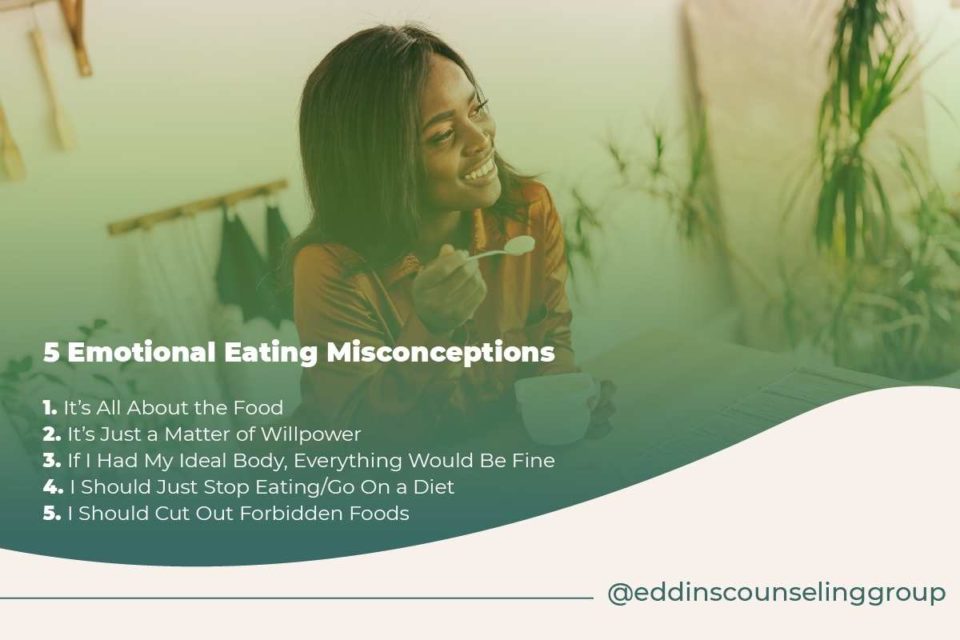
Misunderstandings about eating emotionally are just as common as the act itself. Here are a few of the most prevalent, and the most damaging:
-
It’s All About the Food
You may believe that your primary struggle is with food. In truth, however, although food may be your most tangible surface concern, at the root, you are likely struggling with unmet needs and using food to manage your emotions, whether positive or negative.
Identifying, understanding, and addressing those emotions are absolutely essential steps toward healing from the inside out and connecting with your own needs, wants, and desires. Eating is a means of distraction and results in keeping emotional discomfort below the surface so that you may not even realize it is there.
-
It’s Just a Matter of Willpower
You may believe you could get a handle on your relationship with food if you were only stronger or more determined. But, this misconception is based on the idea that some food and food habits are “bad,” which means you are “bad” for eating or engaging with them.
This misconception often creates a deep sense of guilt and low self-worth, leading to “an unhealthy cycle — your emotions trigger you to overeat, you beat yourself up for getting off your weight-loss track, you feel bad and you overeat again.”
In truth, food and food habits do not carry moral weight, and you aren’t “good” or “bad” for eating certain things or for overeating. Challenging the judgments you might place on food is one of the first steps toward transforming your relationship with your diet and yourself.
|
|
-
If I Had My Ideal Body, Everything Would Be Fine
This misconception often stems from dissatisfaction with—and even hate for—your body. You might be criticizing your body, picking apart all the things that make it “bad” and imagining the changes that would make it “good.”
But, this sort of harsh self-judgment is unlikely to help improve your overall health and wellbeing.
At Psychology Today, clinical psychologist Jennifer Kromberg writes:
It may sound counterintuitive, but it’s true: hating your body is one of the biggest factors in emotional eating. Negativity, shame, and hatred rarely inspire people to make long-lasting great changes, especially when it comes to our bodies or our sense of self. Many people tell me they will stop hating their body after they reach their goal weight. I say you have to stop hating your body before you can stop the emotional eating cycle.
In other words, you have to challenge the belief that your body shape and size determines your value as a person. You have to develop enough love, respect, and compassion for yourself to tend to your emotional needs and begin believing that you matter, just as you are.
|
|
-
I Should Just Stop Eating/Go On a Diet
This is one of the most common, most damaging misconceptions in the list, and it is carried by all kinds of eaters. In fact, it often happens to someone starts out eating “normally,” only to try a diet and begin eating emotionally or excessively as a result of deprivation.
Dr. Kromberg writes, “When your body is hungry or tired, it not only sends strong messages to your brain that signal it to eat, but when we’re hungry and tired we’re not on our A game. This leaves us less equipped to fight off cravings or urges.”
Your body needs food to survive, and when your energy level is depleted, you are more likely to reach for anything that can provide an immediate boost.
Diets create more than just physical deprivation—diets and restrictions also create feelings of emotional deprivation and a sense of being punished.
Forbidding a certain type of food or a certain type of eating habit makes it more desirable. As you anticipate deprivation, it’s common to overeat “one last time” before beginning a diet.
-
I Should Cut Out Forbidden Foods
You are more likely to give into the temptations of the forbidden food, especially when you are struggling to cope with difficult emotions.
According to Melinda Smith, M.A., Jeanne Segal Ph.D., and Robert Segal, M.A, “Diets so often fail because they offer logical nutritional advice which only works if you have conscious control over your eating habits. It doesn’t work when emotions hijack the process, demanding an immediate payoff with food.”
Instead, you can find yourself caught in an ongoing cycle of deprivation, fleeting pleasure/relief, guilt, and deprivation again.
Such misconceptions can be deeply ingrained, perpetuated by messages you encounter every day, whether from the media, your loved ones or coworkers around the office.
They can make it hard to fully understand your relationship with food and recognize how emotions might be driving your overeating.
Are You an Emotional Eater?
You developed your current relationship with food over the course of your entire life. Throughout your development, you learned—consciously and unconsciously—to understand and approach food and emotions a certain way.
Even if you recognize that you want to make a change to your relationship with food, it can be extremely difficult to unpack and pinpoint how and why you eat when cravings seem instinctual.
And, if you feel generally happy and content in your life, it can be especially hard to believe that emotions might be driving your eating.
The following questions and warning signs can help you consider your eating habits and relationship with food from a new, neutral perspective.
Take your time, reflect, and try to be radically honest with yourself. By doing so, you can begin to shift your perspective and develop the insight you need to make positive changes.
Questions to Consider:
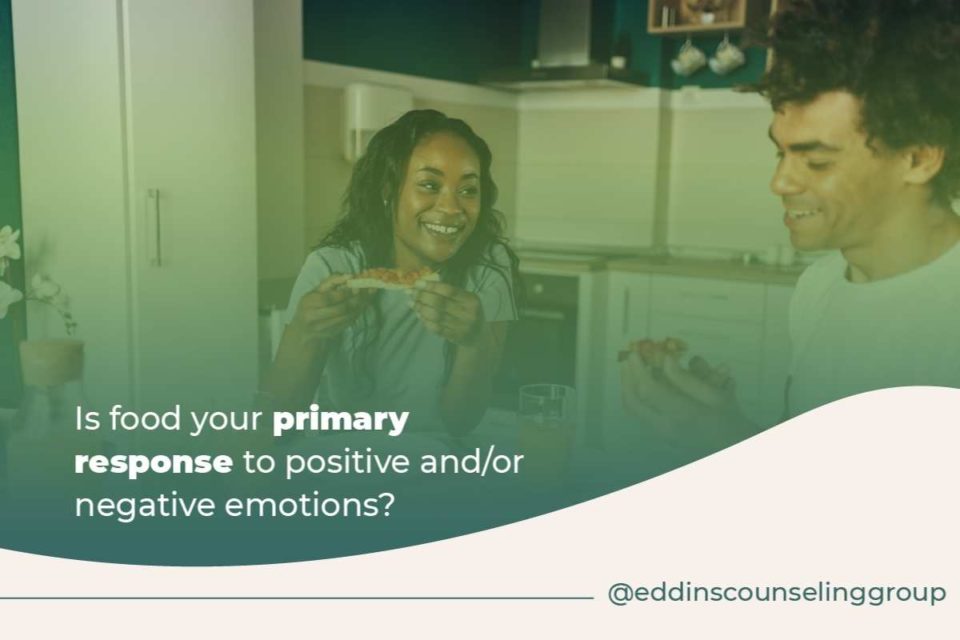
- Is food your primary response to positive and/or negative emotions (e.g., ice cream to reward a finished project, a cookie to soothe a stubbed toe)?
- Can you remember how your caregivers talked about food and body image?
- When did you last overeat? What happened before eating, and how did you feel after?
- Do you eat when you aren’t hungry?
- Do you gravitate to the snack table at social events?
- Do you often avoid eating “bad” foods in front of people, only to overeat later in private?
- Have you been dieting on-and-off for years—maybe as long as you can remember?
- Is food an essential part of “me” time?
- Is food an essential part of social gatherings?
- And more questions here, in this online quiz.
Warning Signs
- Hunger comes on suddenly and intensely
- Stress, boredom, sadness, frustration, and other emotions often accompany the urge to eat
- You frequently crave “junk” food
- You rarely eat balanced meals
- You “feel a lack of control while eating”
- After eating, you are more likely to feel guilt and shame than satisfaction
It’s okay if you recognize yourself in all of these questions and warning signs. Again, emotionally driven eating is very common, and your relationship with food is not an indicator of your value as a person.
There are many reasons why you might be struggling today. Identifying your particular emotional drivers can empower you to take charge and discover sustainable solutions.
|
|
Emotional Eating Triggers, Causes, and Risk Factors
A trigger is anything that prompts certain emotions and behaviors. Often, triggers function unconsciously, which means you might experience a strong emotion or engage in a certain behavior without knowing why or even realizing what you’re doing.
Bringing conscious awareness to triggers is incredibly important, especially if you often engage in compulsive eating.
As you read through this list, you may recognize multiple triggers and causes driving your eating. You might also find that your particular drivers shift from day-to-day.
Even if you feel as though you struggle with most or all of these triggers and causes, know that they don’t have to control your choices and behavior. With increased self-knowledge, you can feel a new sense of agency over your eating.
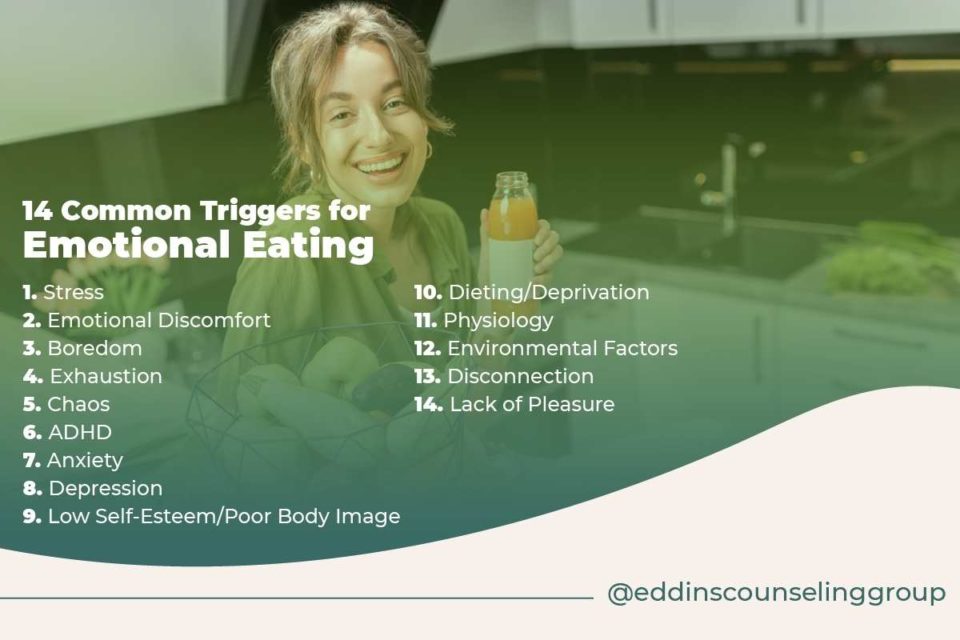
How is Eating Tied to Emotions?
14 Common Triggers for Emotional Eating:
1. Stress
When stressed, many people turn to food as a means of stress relief. A snack or a meal might be your only break throughout a long day. Or, you might never take an official break and find yourself eating mindlessly as you work at your desk or commute from place to place.
You might be so stressed by all the obligations you’re juggling that you put off eating until you are completely depleted, which means you grab the quickest, most convenient food, regardless of its nutritious value.
Stress eating feels relaxing because it activates our parasympathetic nervous system, bringing calm to our body, if only for a short while. The sense of relief brought on by food is fleeting, and so the high stress level returns, and the cycle continues.
To learn how to stop stress eating first your response to stress needs to change to break the cycle.
2. Emotional Discomfort
Perhaps emotions were a taboo topic in your family—if you expressed a strong feeling, you may have been met with punishment or a soothing treat. Conversely, you may have experienced strong emotions and shut them down yourself. Trauma for example can lead to big, scary feelings that we often lack skill in regulating.
Today, when difficult emotions arise, you may feel desperate to ignore them and stuff them down. It may seem that “while you’re numbing yourself with food, you can avoid the difficult emotions you’d rather not feel.”
Like so many people, you may not have learned other, healthy ways to address and regulate emotions.
It’s important to note that you might not be consciously aware of the tendency to bottle emotions. It might just be second nature, and you may be so used to ignoring difficult emotions that you doubt they are there at all.
3. Boredom
Eating can feel entertaining, especially if you lack pleasure in other areas. Food might seem like the only available source of fun in your life.
When you feel bored and disengaged, you might imagine what you will eat next, or what new recipe you might try. It might seem like eating is the only exciting activity in your day.
In fact, thinking about food stimulates dopamine release, increasing feelings of pleasure. This makes it hard to stop boredom eating since you are continuously reinforced with pleasure chemicals.
Boredom eating can happen mindlessly while bored watching tv and a bag of chips disappears.
4. Exhaustion
Calories are a source of energy. In our fast-paced, overworked culture, many people reach for a sugary or salty snack when they really need sleep. It’s common to snack through a late-night study session or rely on snacks to perk you up in the morning.
The more tired you feel—physically and emotionally—the more difficult it is to make deliberate food choices that align with your long-term wants and goals.
Learn more about How to Sleep Better
5. Chaos
When life feels chaotic—your kids have three different practices at the same time, deadlines are looming at work, your relationship is mired in conflict, a loved one is sick, a natural disaster is approaching, and/or national and global news all seems hopeless—eating can seem like a refuge. You may turn to food that offers you a sense of familiarity, stability, comfort, and control.
Eating might also feel like “me time.” It may be that you always set aside 15 minutes to savor your favorite dessert—the only 15 minutes that you have just for you. In those 15 minutes, you can step into a bubble and ignore the chaos swarming around you—at least until the bubble pops.
6. ADHD
ADHD can impact eating habits in a few ways.
- First, you might be taking ADHD medication that suppresses your appetite for most of the day, leaving you ravenous once it wears off.
- Second, because ADHD lowers inhibitions and reduces impulse control, you might find it harder to ignore cravings and think before you eat.
- Third, many people with ADHD find that eating slows their racing thoughts and reduces overwhelming feelings, and therefore use snacking as a focus tool. Finally, eating is often a form of procrastination, a common ADHD trait.
|
|
7. Anxiety
If you struggle with anxiety, you likely feel on-edge, activated, stressed, and worried throughout the day. Anxiety causes many physical symptoms, including muscle tension, headaches, and stomach pain, which can make it difficult to interpret the messages your body is trying to send.
You may not know what relaxation feels like. Eating can bring calm to the nervous system, soothing anxiety symptoms and slowing racing thoughts over the short term.
8. Depression
Depression can manifest as a sense of ongoing emptiness and dissatisfaction. Many people who struggle with depression overeat in an attempt to fill that void. When it’s difficult to get out of bed and make it through the day, food might seem like the only thing to look forward to.
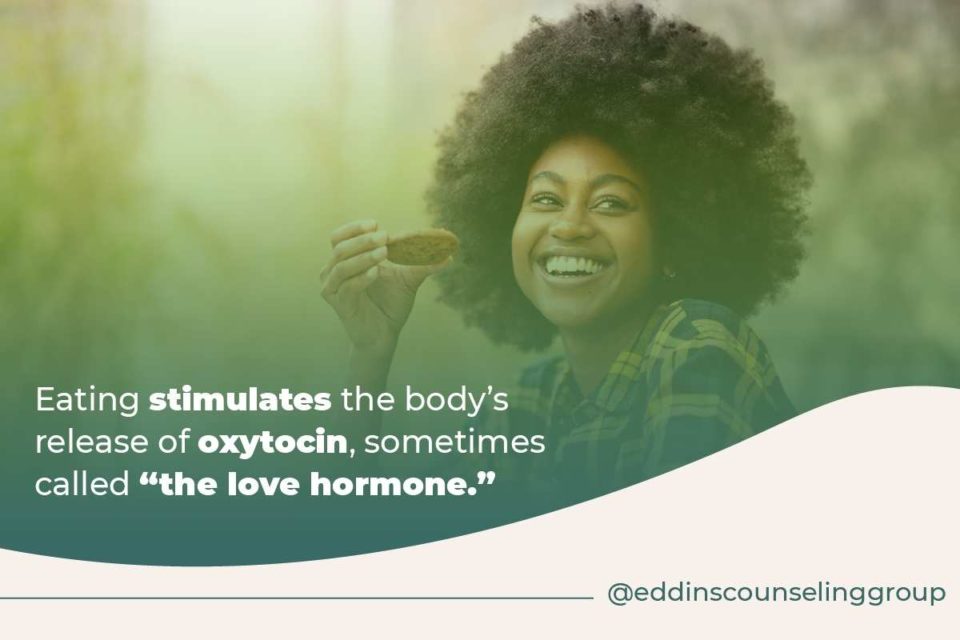
Eating stimulates the body’s release of oxytocin, sometimes called “the love hormone.” Oxytocin floods us with good feelings, which means that food can flood us with good feelings, temporarily warding off symptoms of depression.
9. Low Self-Esteem/Poor Body Image
In our culture, we often hear messages that give food a moral weight. Certain foods are “bad,” which means eating them is “being bad.” Other foods are “good,” so eating them is “being good.” From there, it’s easy to believe that the food choices you make result from and define your moral character.
You might feel weak, inadequate, and otherwise unworthy when you eat foods in the “bad” category. Sometimes, one “bad” snack might make you feel like you’ve failed and should just give up anyway, leading to more compulsive eating.
Similarly, you may harshly judge your body and feel a great deal of shame around eating. You might sense that people are criticizing your food choices and avoid consuming certain things in public.
If you struggle with your weight, you might have calories on your mind at almost every moment, and it might be difficult to imagine a mealtime that is not emotionally fraught. Eating might grant temporary relief from swirling negative thoughts, but intense shame and even harsher self-criticism might follow.
10. Dieting/Deprivation
Studies indicate that “at any given time, roughly 40 percent of women in the U.S. are dieting to lose weight.” We live in a culture full of fad diets, and it can seem like a new, quick weight loss fix is popping up every day. However, depriving yourself of food can only make cravings more powerful.
If you’ve ever experienced prolonged hunger—perhaps due to poverty, an unstable home life, a crisis that led to food shortage, or even a past eating disorder—you may also live with a fear of deprivation.
Perhaps you often worry that there won’t be enough, which leads you to eat more than you really need. At a deeper level, you may have experienced deprivation of your needs. Perhaps there was little physical or emotional connection in your family growing up.
Deprivation of any kind may feel like a threat. In some cases, you may need specialized guidance and support to heal from this trauma.
11. Physiology
Everyone needs to eat, but certain physical and psychological conditions can impact an individual’s cravings and nutritional needs.
Chemical and hormone imbalances may prompt people to reach for food in an attempt to create balance, at least temporarily.
For example, the ADHD brain lacks dopamine, and impulsive snacking can trigger a dopamine release. ADHD Low blood sugar can also trigger intense food cravings.
Increased adrenaline production due to stress creates an increased need for quick energy in the form of sugar and carb cravings. Deep breathing can help you reduce sugar cravings by activating your “rest and digest” nervous system. The more this nervous system is activated, the less sugar your body will need for energy.
12. Environmental Factors
Your upbringing shapes a large part of how you view the world, food, and emotions. If your caretakers used food as a reward, it makes sense that you would use food as a reward today. If your family carried a lot of shame surrounding food and body image, it makes sense that you would also struggle with low-self esteem. Regardless of the particulars, you didn’t develop your relationship with food in a vacuum.
That said, you don’t have to let your upbringing dictate your choices for the rest of your life. You can reinvent your relationship with food and, if you’re so inspired, be part of changing the cultural narrative, both in your family and beyond.
13. Disconnection
Feelings of vulnerability, loneliness, and isolation are common drivers of overeating. It may seem as though you don’t have any close relationships in your life, and so you often return home alone and sit down to eat. Even if you are surrounded by people, in a committed relationship, or part of a supportive community, you may sometimes feel profoundly alone.
During periods of conflict, increased distance, or social anxiety, you might find comfort in eating. For example, at a party, you might return to the snack table so you don’t have to talk to anyone.
Food releases oxytocin, and oxytocin creates feelings of love and connection. So, it makes sense that loneliness and eating are deeply intertwined. For a moment, food can seem like a sort of reliable companion.
14. Lack of Pleasure
This is one of the primary drivers of emotional overeating. Dr. Kromberg writes, “I’ve often asked people what they would have to feel if they did not binge or overeat and the common answer is, ‘I would have nothing to look forward to.’”
If you feel this way, you are not alone. In our hectic, overbooked, stressful lives, it can seem as though there is little time for pleasure. And, even before you became an adult with a never-ending list of responsibilities, you may have found few opportunities to discover what you truly enjoy.
Perhaps your family prioritized hard work and external achievement, and you came to view pleasure as unnecessary—or even selfish. You may be accustomed to sacrificing your own needs and putting your happiness last. Beyond food, you might not really know what you enjoy.
Although many people eat for pleasure, emotional overeaters rarely truly enjoy food.
For example, overeating might lead to physical discomfort and shame. You may feel that you “shouldn’t” be eating pleasurable foods, so you may eat them in a disconnected, rushed, or mindless way, missing out on true satisfaction.
Or, you might impulsively grab something you think you’re supposed to like without stopping to consider what you actually want. Over time, the pleasure you get from food might feel more and more elusive and temporary.
Regardless of the specific triggers and causes underpinning your emotionally driven eating, you can break out of unwanted habits and find new, sustainable ways to meet your physical, mental, and emotional needs.
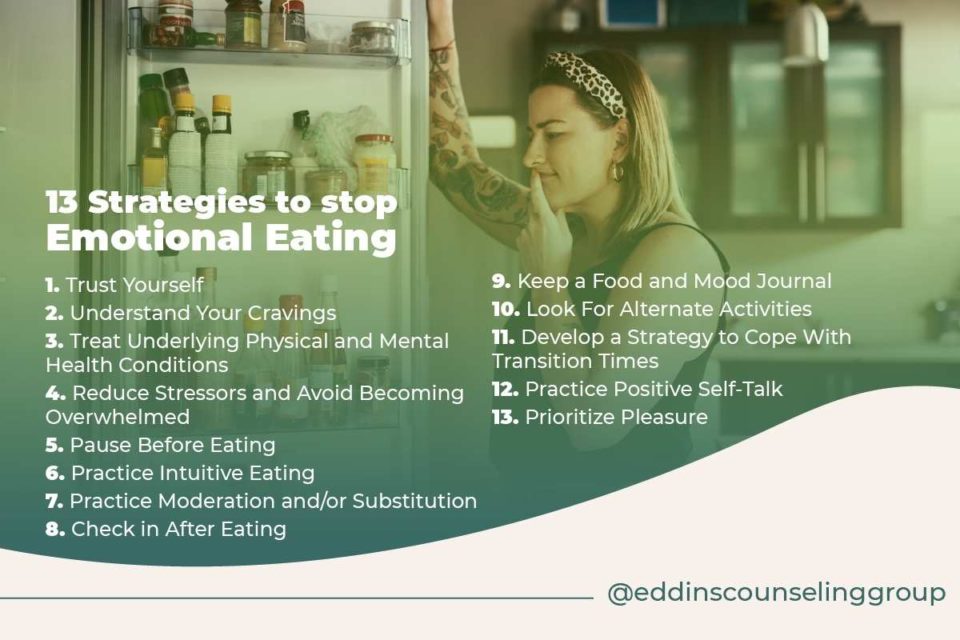
13 Strategies to Stop Emotional Eating
Once you understand your triggers, you can begin effectively responding to them. Before you begin practicing the following strategies, make sure you have spent enough time with the list of triggers above. Your relationship with food is deeply individual, and these strategies will only be effective if you truly know what you—as an individual—need.
Sustainable healing is impossible if you don’t know where the wounds are.
So, take another moment to consider the emotions driving your eating. Then, with patience, self-compassion, and an openness to try new things, read through the following tips and tools.
These strategies are not meant to make you feel as though you are currently doing anything “wrong,” and you should feel free to adapt them to your needs and personality.
The primary goal of these strategies is to help you make the change you want to make for yourself.
You can implement all of these on your own. And, although you can certainly begin right away, keep in mind that your journey to self-awareness, health, and fulfillment is not a race. Practice these tools at your own pace, with curiosity and confidence in the possibility of long-term change.
1. Trust Yourself
Because emotional eating numbs distress, you will likely encounter some difficult emotions as you begin transforming your relationship with food. It may be that you have not fully experienced some of these emotions in a long time, and you might feel ill equipped to cope with them.
Trust that your emotions are valid, and that you do have the strength and capacity to manage difficult emotions, no matter how overwhelming they may seem. As emotional eating expert Allison Dryja writes:
Tell yourself that it’s OK to feel sad, mad, scared, tired—you name it. Welcome your negative emotions with kindness and curiosity, and ask them what they want from you. This includes those intense feelings of guilt or anger that tend to follow an emotional eating episode. Approach your feelings with kindness, and your body will begin to understand that it no longer has to overeat to protect you from your feelings.
Emotional regulation is a skill you can learn, just like any other. With time and practice, you can replace old habits with new, healthy ones that lead to lasting relief. And, when you stop trying to escape your emotions, you can also discover all the joy and pleasure that might have been numbed for years.
2. Understand Your Cravings
Get to know what triggers your cravings and what those cravings mean. When cravings arise, take note of your present situation and begin to look for patterns. Ask yourself:

- What does the craving feel like? (emotional vs. physical hunger.)
- What exactly do I crave?
- What time of day do cravings feel strongest?
- Does a certain kind of interaction lead to cravings?
- Does a certain kind of event lead to cravings?
- When do the cravings go away?
By learning more about your cravings, you can begin to make proactive changes to avoid or soothe them. For example, if you realize that you always crave a candy bar at three in the afternoon, you might discover that you’re prone to a mid-afternoon slump. Further investigation might make you realize that you don’t eat enough at lunchtime, or that you simply should prepare a nutritious pick-me-up snack.
You can prepare for situations that might lead to a binge and make healthy food choices easier and more accessible.
Often, however, you’re likely to find that your cravings are tied to more than fatigue and low blood sugar.
Leading nutrition coach Dr. Rovenia M. Brock writes:
If the emotion behind your craving is more complex, you may need to think about a more long-term solution. For example, if stress about a bad relationship is pushing you into the kitchen, you may need to consider getting counseling or ending the relationship.
If a horrible boss drives you to the comfort that chocolate provides, it may be time for a meeting with human resources or even thinking about a new job. And if depression or anxiety causes cravings, it may make sense for you to see your doctor or a therapist who can help you manage these emotional problems.
Whatever you determine the best solution for you to be, know this: You must deal with the problems that cause you misery.
Developing deep awareness around your triggers and cravings can equip you with the knowledge and motivation you need to enact meaningful change in every aspect of your life. By listening to your body, you can discover where you are unhappy and find clues pointing you in the direction of greater overall fulfillment.
3. Treat Underlying Physical and Mental Health Conditions
This strategy is closely related to understanding your cravings. If you know or suspect that a physical or mental health condition is triggering compulsive eating, then seeking diagnosis and/or treatment is a top priority. Otherwise, you may just find yourself frustrated, exhausted, and defeated by repeated attempts to create change with “willpower” alone (and willpower has little to do with emotionally driven eating).
For example, if you have ADHD, your best attempts to control impulses and cravings on your own might be thwarted by the reality of your brain structure. You might find yourself stuck in a cycle of compulsive eating and self-criticism, which can take an enormous toll on your overall sense of self.
Struggling with ADHD symptoms doesn’t make you weak or incapable, but it does mean you may need extra tools and skills to navigate certain challenges.
Treatment allows you to take charge of ADHD symptoms and empower yourself to make decisions that serve your values and goals.
The same goes for depression, anxiety, hormone imbalances, and any other physical or mental health condition. Your mind, body, and emotions are all connected, and taking care of one part of yourself means taking care of the whole self.
4. Reduce Stressors and Avoid Becoming Overwhelmed
If you are a busy person with a lot on your plate, this strategy may seem nearly impossible to implement. It’s true that, for the most part, you cannot completely avoid stress, anxiety, and overwhelm. Instead, you must learn to accept these feelings, self-soothe, and manage challenges in productive ways.
Still, it is possible to reduce the stressors you encounter in your life. Take a look at your schedule. Ask yourself:
- Am I doing things that serve me?
- When do I feel the most stressed out?
- What does stress feel like for me?
- Am I overextending myself for others without leaving time for myself?
- Can I let go of one of these responsibilities?
- Do I ever say no? What would that feel like?
- Am I holding myself to an impossibly high standard?
- When do I give myself permission to feel peace and pleasure in my day?
- What makes me feel the most relaxed (besides food)?
- Have I decided that I deserve and am worthy of self-care?
Exploring these questions may help you figure out how you can reduce the level of stress in your life. For example, you may discover that you never say no, even though your schedule is already overloading. Then, you could practice respectfully refusing the next time someone asks you to do something, thereby freeing up time for self-care.
If you struggle with high levels of stress and anxiety, it may be useful to seek the guidance of a qualified therapist.
You can learn effective ways to self-soothe in moments of heightened pressure and tension, including meditation and deep breathing exercises.
You may also discover that your high-stress patterns serve a function for you just as food does. Remember, your wellbeing deserves as much time, effort, and attention as anything else in your life.
Read more: Ways to Calm and Soothe Yourself
5. Pause Before Eating
If you feel a craving for food, pause for five minutes before eating. Or, “start with one minute. Don’t tell yourself you can’t give in to the craving; remember, the forbidden is extremely tempting. Just tell yourself to wait.”
Why wait?
According to Dr. Brock, “We respond automatically to feelings of hunger. We feel hungry, we go to the refrigerator, we grab a piece of cheese or a tub of Ben & Jerry’s, and we gobble it up—all without thinking or analyzing our feelings or actions. By slowing that process down, you can begin to take control of emotional hunger.”
In the space of the pause, consider where the craving you’re experiencing is coming from. Explore whether it stems from emotional or physical hunger. Ask yourself:
- When is the last time I ate?
- What did I last eat?
- Have I had water?
- What do I feel in the present moment? What sensations do I notice?
- What am I craving?
- Can my craving really be satisfied by food?
- If yes, what kind of food do I need right now? Protein? Something hydrating?
- If not, what am I really hungry for? Connection? A moment of calm?
Questions like these can help you make positive eating choices and break the cycle of emotionally driven eating.
Note: It’s okay to go through these questions and conclude that you really are hungry. There’s nothing shameful about eating, even eating emotionally. These questions are intended to help you meet your deepest needs, and sometimes that will look like a snack!
6. Practice Intuitive Eating
“Intuitive eating” is another way of talking about eating when you are truly physically hungry. The questions in the above strategy (Pause Before Eating) can be extremely helpful for intuitive eating.
You might also try “The Broccoli Test.” If you wouldn’t eat broccoli to fulfill your craving, you might not be physically hungry (if you absolutely love broccoli, substitute this for a veggie you don’t adore).
In short, “eat real, healthy, and nourishing foods whenever you experience physical hunger.”
|
|
7. Practice Moderation and/or Substitution
Even after you pause and remember intuitive eating, you may have a specific craving you just can’t shake. That’s okay! Despite what we often hear from the media and those around us, there are no “bad” foods, and you are never “bad” for eating. If you want to eat a piece of chocolate, it’s okay to eat a piece of chocolate! Especially if you have struggled with excessive calorie restriction in the past, remember that you have not failed if you have a treat.
During the process of creating a healthier relationship with food, you may want to set some guidelines to avoid overeating or binging.
For example, you might try having a just a few bites of chocolate, then pausing to see if you are satisfied. This way, you can begin balancing cravings without restricting yourself or eating more than you really want to.
You might also try finding alternatives for specific “comfort foods” that you crave. If you are craving fries, consider that you might really be craving something warm and salty. You might be satisfied with popcorn, or even with a baked potato.
The more you learn about your cravings (Strategy 2), the better prepared you will be to fulfill them without reaching for whatever’s convenient. Instead, you can make the food choices that you really want to make easier and more accessible.
8. Check in After Eating
A short time after you have finished eating, check in with how you feel physically and emotionally. You might ask yourself:
- Do I feel full?
- Did I keep eating even after I was full?
- Is my craving satisfied?
- Did I eat something I now wish I hadn’t?
- How do I feel about myself right now?
Dr. Brock writes:
If after 15 minutes you feel unhappy with the choice you made, reflect on how you might have acted differently. But do it with a positive spin. Remember that the goal here is to learn from your mistakes, to take lessons away from your experience. I do not want you to feel angry at yourself or to beat yourself up for making a poor choice; all that will do is bring you down and lead you to even more emotional eating.
In other words, don’t do this check in to make yourself feel bad. That is not the goal here. Again, there is no “bad” food and no “bad” way of eating. What and how you ate doesn’t mean anything about your worth as an individual.
What you discover in this self-reflection can help you better understand your cravings and productively continue your journey to a better relationship with food. Remember to approach yourself with patience, acceptance, and compassion.
9. Keep a Food and Mood Journal
 As you try out the strategies explained above, you may find it helpful to write down your experiences in a food journal. However, this should be more than a log of what you ate and when, and you certainly don’t need to include a calorie count. Calorie restriction is not the goal here—improved overall wellbeing is.
So, if it seems helpful, try writing down how you feel before you eat, what you eat, and how you feel after. For example, you might write down how much time passes between meals and snacks, and track your mood at eating times and between.
Keeping a journal can help you notice patterns and recognize when and what you need to eat.
Note: Only keep a food journal if it does not feel triggering for you. If you have struggled with eating disorders in the past, keeping a journal may create pressure for you that leads to unhealthy eating habits. Do not do anything that leads to undue emotional distress. There are other ways to bring awareness to your relationship with food. Know that what you need is valid, and above all, take care of yourself.
10. Look For Alternate Activities
Over time, as you practice intentional self-reflection, you may find that you often eat when you are bored, upset, stressed, celebrating, or otherwise seeking some sort of emotional fulfillment. It may be that you have responded to these emotions and experiences with food your entire life. So, you may have to sit down and think about other interesting, appealing activities that you can try when difficult or powerful emotions arise.
No matter what you do, start out by breathing deeply, which may actually fulfill you more than you realize.
- If you are a physical or outdoors person, get outside! In the moment, there’s often little time for that, so get up, stretch your body, and try a few jumping jacks to get your blood flowing.
- If you need physiological soothing, try a hot cup of tea, a warm bath, a cold ice pack you keep in the refrigerator, aromatherapy scents, or a scented candle or lotion.
- If your mind needs a break, pick up an interesting article, book, or brainteaser.
Connecting with your emotions can often be the most comforting. Try writing your thoughts and feelings in a journal or reaching out to a friend for connection. If you are a creative person, take a break to work on a creative activity, such as scrapbooking, knitting, coloring, or gardening.
If you often eat socially, think about other activities that might bring friends together. For example, instead of meeting for happy hour, consider meeting for a guided art class.
If you often eat to celebrate an occasion, consider an activity that might be more aligned with the spirit of your achievement and long-term goals.
For example, after you complete a long project, maybe you want to spend meaningful time with your partner more than you really want to go out to dinner.
Of course, that doesn’t mean you have to cut out evenings at nice restaurants. Instead, the process of understanding what you really want and seeking out activities that satisfy your needs should make everything more enjoyable and fulfilling, special restaurant dates included.
11. Develop a Strategy to Cope With Transition Times
You may discover that you often snack mindlessly during “transition times,” or those spare few minutes between activities and meals. For example, you might snack when you return home from work, or while you are cooking dinner.
Look for ways to approach transition times with greater awareness. Are you eating because you want to, or because you associate these brief pauses in your day with a snack?
Could that mean you need more pauses in your day? Or that you are seeking some other sort of relaxation or release in the pause?
If your “transition times” are really just a few minutes, you may not be able to try out a brand new hobby. Instead, perhaps try practicing a short meditation. Look back on your day up to that point, or simply close your eyes and breathe. Or, maybe write down a few notes in a journal (whether or not it’s a food journal).
If you find that you are extremely hungry during these transition times, it may be that you are not eating enough throughout the day, but are too busy to realize it until you have a moment to catch your breath. In this case, think of ways you can provide for your body even in the midst of a hectic schedule. Plan and pack appropriate snacks and schedule snack times in your planner or alarm clock. Remember, your body needs fuel!
12. Practice Positive Self-Talk
The entire process of gaining awareness around your eating and interrupting patterns of emotionally driven eating can be trying. It can be tempting to criticize yourself for perceived “failures” or to judge yourself for the choices you’ve made up until this point.
It’s difficult to challenge negative self-talk, especially if you’ve been engaging in it for most of your life. You may not feel able to imagine a reality in which you like yourself, let alone how you look. You may avoid looking in mirrors or photographs. And, you may be accustomed to deflecting praise. But, practicing positive self-talk is as important as it is hard.
Open yourself to the possibility that the cruel things you say or think about yourself may not be true. Then, find ways to say small, true, positive things to yourself. This isn’t about lying or false positivity. This is about recognizing all the wonderful things about yourself that you might struggle to see.
Here’s an example: From the moment you wake up, try to think about one thing you like about yourself. Then, the next day, think about the first thing, and add a second. Create a small, personal collection of all of the things you value in yourself.
As Allison Dryja says, “It’s time to wake up to your beauty and feed your body with the love and tenderness it truly deserves.”
13. Prioritize Pleasure
As described above, many people feel a distinct lack of pleasure in their lives and rely on food for brief moments of happiness. But, pleasure is not selfish or excessive. It is essential to the enjoyment of life, and to overall health and wellbeing.
Practicing mindfulness and mindful eating can help you begin to prioritize pleasure. Mindfulness is the process of bringing yourself fully into the present moment, becoming aware of your sensations in the here and now, without judgment.
Mindful eating “means being fully attentive to your food—as you buy, prepare, serve, and consume it.” This can help you take the time to know what you really want to eat and derive real pleasure from every stage of eating. You can become more attuned to pleasant smells, tastes, and textures and more in touch with sensory delight.
More importantly, prioritizing pleasure means looking for enjoyment, fun, and comfort outside the realm of food. Each day, try doing something that brings you joy.
If you don’t know what you like or what interests you, this might take time. That’s okay. There is joy to be found in the process of discovery.
Remember, take all the time you need, and grant yourself the gift of patience, curiosity, and self-acceptance.
Think about long-abandoned hobbies or interests you never had a chance to pursue. Can you pursue them now? Look for local classes, outdoor activities, and healing exercises. Soak in a bubble bath. Treat yourself to the pleasures you may have denied yourself for one reason or another. Allow yourself to believe that you deserve pleasure. You do.
If it is difficult for you to identify what you really want, that’s okay. Many people struggle to make happiness a habit. That’s where therapy can help.
|
|
Heal Emotional Eating: How to Get the Support You Need
When to Seek Professional Help for Overeating
Shifting your perspective and healing emotional eating from the inside out doesn’t happen overnight. It’s okay to hit roadblocks and find yourself falling back into old habits. In fact, it’s expected.
Just as it took a long time—maybe a lifetime—to develop emotionally driven eating habits, it can take time to embrace new ways of understanding your emotions and your relationship with food. And, many changes can be difficult or even impossible to make without some form of professional support.
There is nothing wrong with seeking professional help. According to the Mayo Clinic, it may be time to seek therapy for overeating when “you’ve tried self-help options but you still can’t control emotional eating.”
If you believe you could use some extra guidance and support, don’t hesitate to reach out to a mental health professional who specializes in body image and disordered eating. And if you are struggling with anxiety, depression, ADHD, trauma, or something else (or a combination), know that taking care of your mental health is a priority.
A therapist can help get to the emotional root of your triggers, set achievable goals, and address any challenges that arise along the way.

Types of Professional Help Available
You may find it useful to work with a:
- Nurse
- Doctor
- Dietician
- Therapist
- Psychiatrist
- Support group
Or, you may decide that you’d like to work with a combination of specialists. By addressing emotionally driven eating in a holistic way, you offer yourself a greater variety of effective tools to practice and adopt.
With so many potential avenues for professional aid, you might question which is right for you and where you can turn to receive the diagnosis and support you truly need.
How Emotional Eating Is Assessed
One of the first steps professionals take before identifying emotional eating is to ensure a physical examination and lab work have been completed to assess genetic and medical factors that may be causing or contributing to your emotional eating.
After physical factors have been identified or dismissed, you are likely to talk to a mental health professional, who may ask you questions in a session or ask you to administer a self-test. During this initial assessment, the mental health professional will ask you about your history with food and body image to determine the presence of any other mental health issues and/or eating disorders.
You may also be asked to talk about any eating disorders you struggled with in the past, even if you no longer present symptoms or engage in the same disordered behaviors. A mental health professional will want to make sure you are not triggered by any treatment plan.
How to Find the Help You Need to Overcome Compulsive Overeating
First, consider the kind of guidance and support you need and want the most. Next, look for providers and clinicians who specialize in emotional eating or eating concerns in general.
If you decide to work primarily with a therapist, know that the therapeutic relationship is key to long-term progress. Don’t be afraid to look around and go to multiple consultations until you find the therapist that clicks with you. Above all, look for someone who makes you feel heard, understood, accepted, and validated.
You deserve the opportunity to nurture your best self, with someone on your side.
You Deserve True Fulfillment
Everyone eats emotionally from time to time, and food is nothing to feel ashamed of. Even if you feel as though your relationship with food must mean you are damaged or abnormal in some way, know that you are not alone, and that there are people who share your experience.
If you want to make a change in your life, there are proactive, practical steps you can take to change your relationship with food. You don’t have to feel controlled by food, and you don’t have to go through life feeling numb, deprived, ashamed, or hopeless.
It is possible to manage emotional eating and live a connected, fulfilling life based on your deepest needs and values.
Make Peace with Food Program
If you are in the Texas area, join us for the Make Peace with Food program and overcome emotional eating. If you are outside the Houston area, we offer an online coaching program, Beyond Emotional Eating. These programs focus on helping you balance physical triggers, overcome emotion-driven eating and create long-term changes in your relationship with food.
Sources
https://www.medicinenet.com/emotional_eating/article.htm
https://www.helpguide.org/articles/diets/emotional-eating.htm
http://www.mayoclinic.org/healthy-lifestyle/weight-loss/in-depth/weight-loss/art-20047342?pg=2
https://www.webmd.com/diet/stop-emotional-eating
https://www.mindbodygreen.com/0-15554/try-these-powerful-tools-to-stop-emotional-eating.html
http://www.oprah.com/health/emotional-eating-cure-for-emotional-eating